
 Why Birdfeeders Should be Cleaned Regularly
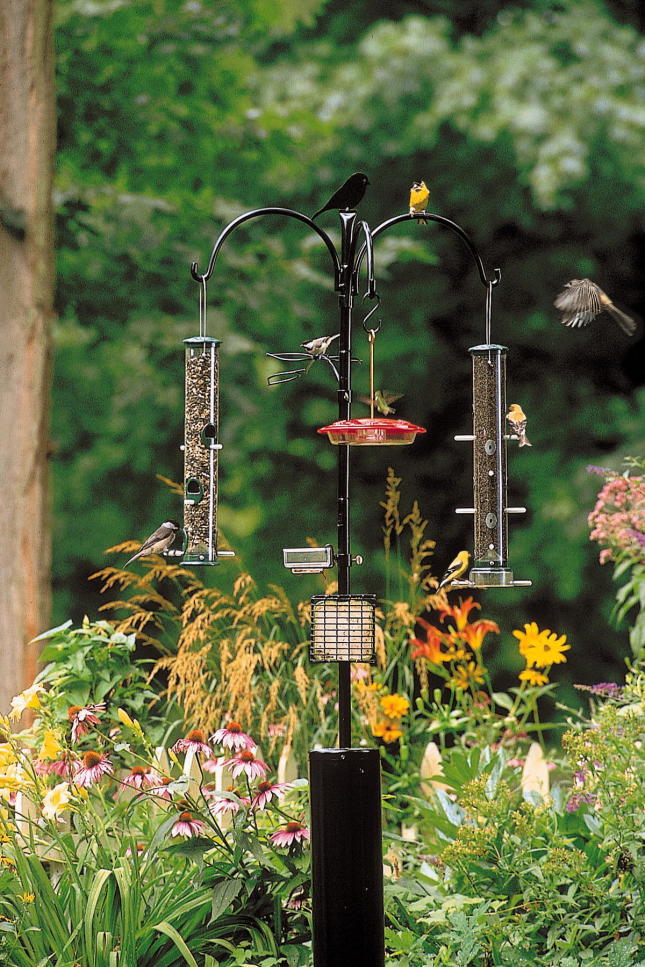
Some of our favorite bird species commonly visit bird feeders. These feeding stations may be an important factor in their well-being during some segments of their life cycle. However, poorly maintained feeding stations may contribute to the occurrence of infectious disease and mortality.
Here are the reasons you should regularly clean your feeders:
A thorough cleaning removes dirt, mold, fecal matter, etc., making your feeder a healthier place for the birds.
Clean feeders stay in better repair. Layers of grime will cause wood to rot more quickly. Mold also causes pitting and corrosion of some metal feeder parts. In finch feeders, we've actually seen aluminum perches eaten all the way through with corrosion from moldy food that has been allowed to sit for weeks or months.
Use only good food - Discard food that smells musty, is wet, looks moldy or has fungus growing on it. Disinfect any storage container that holds spoiled food, as well as, the scoop used to fill feeders.
Keep feeders clean - Clean and disinfect feeders regularly. Soak the feeders in warm, soapy water for about 15-20 minutes, scrub, and rinse. Then, use one-part liquid chlorine household bleach in nine parts of tepid water (a 10% solution) to disinfect. Make enough solution to immerse an empty, cleaned feeder completely for two to three minutes. Allow to air dry. Once or twice a month should do, but weekly cleaning may be needed if you notice sick birds at your feeders. If you have feeders with antimicrobial protection, you can skip the bleach rinse.
Most feeders can withstand cleanings, but some may simply need to be replaced. Clean feeders will help save the songbirds. Happy Birdfeeding!
(Kathy and her husband, John, own and operate the Wild Birds Unlimited, located in Billings and at wbu.com/billings. She is a Certified Bird Feeding Specialist and is past president of the Yellowstone Valley Audubon Society.)